Reading The Interface, Roulette Game
Reading the interface: what Indian roulette game players need to know before they start, in plain language.
What Is Reading The Interface?
When you sit down at a roulette game, whether at a physical casino table or through an online platform, every visual element on screen or felt in front of you is part of the interface. Reading the interface means understanding what each zone, label, number, and control does before you place a single chip. Players who take a few minutes to study the layout consistently make fewer accidental bets, recover from confusion far faster, and spend more of their session focused on strategy rather than deciphering unfamiliar buttons.
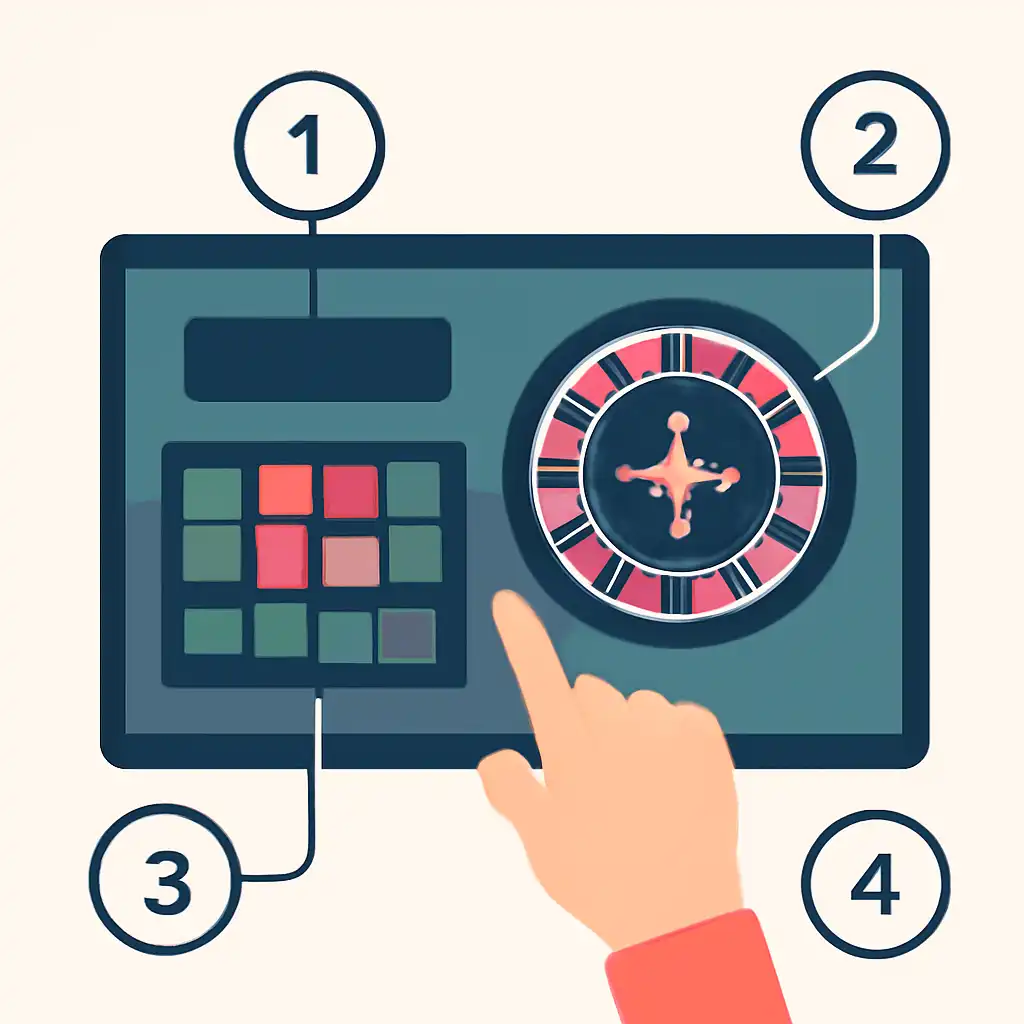
A standard roulette game interface divides into three broad regions. The first is the wheel display, which shows the spinning wheel and, after the ball settles, the winning number highlighted in red or black (or green for zero). The second is the betting grid, a numbered cloth layout, often called the felt, where you position chips to represent your chosen wager. The third is the player controls area, housing your chip denominations, your current balance figure, bet confirmation buttons, and, in timed rounds, a countdown indicator showing how many seconds remain before the wheel spins.
Understanding how these three regions interact is the foundation of confident play. A number illuminated on the wheel links directly to a cell on the felt; the chip you selected in the controls area determines how much money that cell represents. Knowing that chain, wheel result → felt cell → chip value → payout, is exactly what reading the interface trains you to do.
Reading The Interface, Tips And FAQs
Quick Tips Before You Play
- Identify the chip tray first. Before studying the felt, locate where chip denominations are displayed. Selecting the wrong denomination, say ₹500 instead of ₹50, is the single most common and costliest interface mistake.
- Trace the outside-bet labels. The outermost columns of the felt hold bets like Red/Black, Odd/Even, and Low/High (1 to 18 and 19 to 36). These labels are always printed in text, not just colour, so read them rather than assuming by position alone.
- Hover before you click. On digital tables, hovering your cursor over a cell shows a tooltip or highlight confirming the bet type and the payout ratio. Use this to verify your intention before committing chips.
- Watch one full round without betting. Every reputable online roulette game lets you observe a round. Use that window to watch how the timer counts down, where the winning number appears on screen, and how the payout animation flows back to the balance display.
- Note the variant name. European roulette shows one zero (pocket 0); American roulette shows two (0 and 00). The felt layout changes shape slightly between the two, and the house edge differs. Confirm which variant you are playing before the first spin.

- Why does my chip land between two numbers instead of on one?
- That is intentional, it represents a split bet, covering both numbers at odds of 17 to 1. The felt is designed so that placing a chip on any line, corner, or edge selects a multi-number bet. Refer to the inside-bet guide in the step-by-step section below to understand every valid chip position.
- What does the green zero cell mean on the felt?
- The zero (and double-zero in American roulette) belongs to the house and sits at the top of the felt grid, separated visually from the red and black number cells. A straight-up bet on zero pays 35 to 1, the same as any single number, but it is the pocket that makes Red/Black, Odd/Even, and Low/High bets losing wagers when it hits, because zero is neither red nor black, neither odd nor even, and is excluded from the 1 to 18 and 19 to 36 ranges.
- What is the round timer and what happens when it reaches zero?
- Many online roulette games display a circular or linear countdown, typically between 15 and 30 seconds, during the betting phase. When it reaches zero, the betting window closes automatically, the wheel animation begins, and no further chips can be placed or removed until the result is declared and the next betting phase opens.
- How do I read the hot-and-cold number display some tables show?
- Hot numbers are those that have appeared most frequently in recent rounds; cold numbers have appeared least often. This display is a historical summary drawn from the session's spin record. It tells you past frequency, not future probability, each spin remains an independent event. Use it as orientation, not as a prediction tool.
- Can I place chips on more than one area of the felt per round?
- Yes. Most roulette games allow multiple simultaneous bets up to the table's maximum total stake. You can, for example, back a specific number on the inside grid and also place an outside bet on Red in the same round. Each chip position is evaluated independently when the result is declared.
Reading The Interface, Step By Step
-
Locate the variant indicator
Before anything else, find where the game labels its variant. It is usually printed at the top of the felt or shown in the title bar, "European Roulette", "American Roulette", or "French Roulette". This determines the wheel pocket count and, for French tables, whether La Partage or En Prison rules apply to even-money bets when zero hits.
-
Study the felt grid from the inside out
The numbered cells in the centre of the felt form the inside-bet zone. Numbers 1 to 36 are arranged in three columns and twelve rows, coloured red or black to match the wheel. Zero sits at the top. Each number cell accepts a straight-up bet (35 to 1 payout). Placing chips on the lines between cells creates the following bets:
- Split: chip on the line between two adjacent numbers; pays 17 to 1.
- Street: chip on the outer edge of a row of three numbers; pays 11 to 1.
- Corner: chip where four numbers meet; pays 8 to 1.
- Six Line: chip on the outer edge where two rows of three meet; pays 5 to 1.
-
Read the outside-bet labels carefully
Bordering the numbered grid are the outside-bet boxes. Reading left to right along the bottom edge you will typically find:
- 1st 12, 2nd 12, 3rd 12: dozen bets covering numbers 1 to 12, 13 to 24, and 25 to 36 respectively; each pays 2 to 1.
- 1 to 18 (Low) and 19 to 36 (High): even-money bets on the lower or upper half of numbers.
- Even and Odd: even-money bets on the parity of the winning number.
- Red and Black: even-money bets on the colour of the winning pocket.
- 2 to 1 column boxes: three boxes at the far end of the columns, each covering a full vertical column of twelve numbers.
Never assume position alone tells you the bet type, always read the printed label, because table layouts vary slightly between software providers.
-
Select your chip denomination
The chip tray is usually displayed at the bottom of the screen or along the table edge. Each chip icon shows a currency value. Click or tap the chip you wish to use; subsequent clicks on the felt will place that denomination. To increase a bet, click the same cell multiple times, each click adds one chip of the selected value. To switch denominations mid-round, click a different chip in the tray before clicking the felt again.
-
Confirm your balance and total bet figure
Somewhere near the chip tray you will see two numerical readouts: your remaining balance and your total bet for the current round. Verify both before the countdown ends. If the total bet figure seems higher than intended, use the Undo or Clear Bets button, almost all digital roulette tables provide one, to remove the last chip placed or to clear the felt entirely.
-
Watch the result announcement
When the wheel stops, the interface highlights the winning number on both the wheel graphic and the felt grid simultaneously. Winning bet cells are typically outlined or lit up. The software then calculates and adds your winnings to the balance display automatically. Take a moment to verify the number announced matches the cell highlighted, this builds familiarity quickly and confirms the game is resolving correctly.
How Reading The Interface Works
Reading the roulette game interface is essentially a process of mapping visual zones to mathematical outcomes. Every element you see on screen exists to communicate one of four pieces of information: where to bet, how much to bet, what the result was, and how your balance changed. Once you understand which element carries which message, the interface becomes transparent, you stop reading it consciously and start playing through it.
The Felt as a Probability Map
The felt layout is not arbitrary. Inside bets are placed closer to the wheel area because they cover fewer numbers and carry higher payouts; outside bets sit at the perimeter because they cover large groups of numbers and return smaller odds. The physical distance of a bet from the centre of the grid is a rough visual proxy for risk, the further out, the broader the coverage, the lower the payout, and the higher the short-term win frequency.
Column and dozen bets sit between inside and outside zones, both literally on the felt and conceptually in terms of coverage (twelve numbers) and payout (2 to 1). Training your eye to read the felt as a gradient from high-variance inside bets to low-variance outside bets helps you build mixed strategies quickly without memorising every cell individually.
How the Chip System Communicates Value
Roulette game interfaces use chips rather than typed numerical inputs because chips provide immediate visual confirmation of commitment. When you see three ₹100 chips stacked on a corner bet, you instantly know ₹300 is at stake on four numbers. That visual stack is faster to read than any text field. The denomination you select persists until you change it, which means a single accidental click at the wrong denomination can compound across multiple cells if you are not watching the tray indicator. Checking your selected denomination before each round is a discipline that experienced players build into muscle memory.
Result Display and Payout Verification
After each spin, the winning number is announced visually in at least two places, on the wheel itself and on the felt grid. This redundancy is intentional: it lets players cross-check the result without relying on a single display element. The payout calculation happens instantly and automatically, adding winnings to the balance before the next betting phase opens.

If you want to understand your payout after the fact, the standard formula is straightforward: multiply your chip total on the winning bet by the payout ratio, then add back the original stake. For example, ₹200 on a street bet (11 to 1) returns ₹2,200 in winnings plus your ₹200 stake, for ₹2,400 credited to your balance. Knowing the payout ratios for each bet type, information published in plain text by every reputable casino regulator, including the All India Gaming Federation and the respective state gaming authorities that oversee legal play in Goa, Sikkim, and Daman, allows you to verify any payout simply by reading the chips on the felt and multiplying.
Building Interface Fluency Over Time
Interface fluency comes from deliberate observation rather than repetition alone. After each session, recall which interface element confused you or slowed your decision-making. Was it identifying the correct outside-bet box under time pressure? Was it misreading the chip denomination? Was it losing track of which cells you had already covered? Naming the specific friction point lets you focus the next session's observation on exactly that element. Most players achieve comfortable fluency, the point where the interface disappears and only the strategy remains, within five to ten observed or low-stakes rounds of focused attention.
Roulette Game covers the principles and layout conventions that hold across virtually all roulette variants. For rules specific to a particular casino's table, minimum and maximum stakes, house-rule variations such as La Partage, and the precise felt layout used, consult the official game rules published directly by the casino or platform where you are playing.