Common Beginner Mistakes, Roulette Game
Common beginner mistakes explained for roulette game: step-by-step, with the details most guides leave out.
What Is Common Beginner Mistakes in Roulette Game?
Common beginner mistakes in roulette game are the recurring, avoidable errors new players make before, during, and after each spin. They are not caused by bad luck, they are caused by gaps in understanding how roulette odds, bet types, and bankroll mechanics work. Identifying them by name is the first practical step toward playing smarter at any table.
The most prevalent mistakes include playing the American wheel when a European table is available, betting without a session limit, chasing losses by doubling stakes emotionally, and misreading payout ratios as probability. Each error independently increases the effective house edge beyond the base 2.7% that European roulette already carries, costing Indian players real money on every session they sit down unprepared.

How Common Beginner Mistakes Works Against You
Each mistake works by widening the gap between what a player expects and what roulette mathematics guarantee over time. The gambler's fallacy is a clear example: a beginner sees black appear seven times and bets heavy on red, believing it is "due." The wheel carries no memory, every spin resets to identical fixed probabilities. The player pays full risk for zero statistical benefit.
Playing American roulette instead of European roulette is the quietest mistake. The extra double-zero pocket raises the house edge from 2.7% to 5.26%. On ₹10,000 wagered across one session, that difference represents an additional ₹256 in expected losses, simply because the player chose the wrong table variant in the lobby without checking first.
Common Beginner Mistakes for New Players
New players on Indian roulette platforms frequently ignore game variant selection. The lobby often lists American, European, and French roulette side by side. Clicking the first available game without verifying the wheel type is one of the most expensive passive mistakes a beginner can make. Always confirm a single-zero wheel before placing any chips.
New players also enter sessions without a stop-loss figure. Deciding to "play until the money runs out" removes every decision-making checkpoint that protects a bankroll. Set a hard exit number, for example, quit if your session balance drops 30%, before the first bet is placed, not after losses have already mounted and emotions are running high.
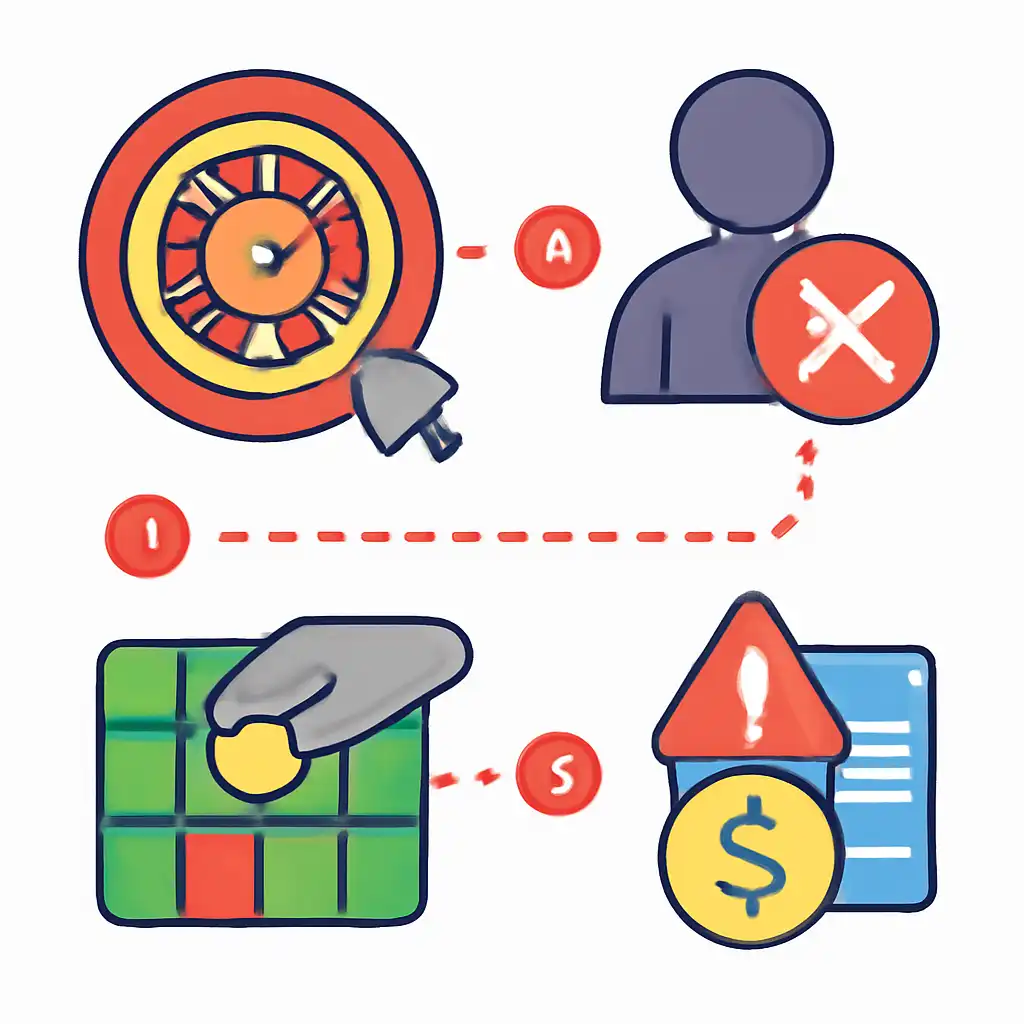
Placing straight-up single-number bets exclusively, drawn by the 35:1 payout, is another trap. Mixing inside and outside bets, pairing a straight-up bet with an even-money red/black wager, extends session length, smooths variance, and keeps a beginner at the table long enough to actually learn the game rather than bust out in the opening ten spins.
Common Beginner Mistakes Step by Step
Step one: before sitting down, check the wheel. Open the game info panel and confirm the house edge. If it reads 5.26%, close the tab and find a European or French variant with a 2.7% or lower edge. This single action costs nothing and saves money on every future session.
Step two: set two numbers before betting, a win target and a loss limit. Write them down. If your bankroll hits either number, close the game immediately. Skipping this step is how a winning session reverses into a losing one inside fifteen minutes.
Step three: avoid the Martingale system during your first month of play. The doubling progression hits table maximums during routine losing streaks, leaving accumulated losses unrecoverable. Instead, use flat betting at 2 to 3% of your session bankroll per spin while you build pattern recognition and comfort with roulette's natural variance.